Nipple color · What lightening can change

Can Nipple Color Be Lightened? What a Laser Can Change

Dr. Hye-Yeon Lee
Dr. Hye-Yeon LeeKorean board-certified OB/GYN · Representative director

Yes, you can lighten your nipple color to a degree, and a fractional laser is one way to do it. At S Women's Clinic in Seoul the change is partial and gradual: sessions are about a month apart, and the clinic's guidance is that the lighter shade lasts around a year, varying by person. Dr. Hye-Yeon Lee, a female OB/GYN specialist, examines you first.

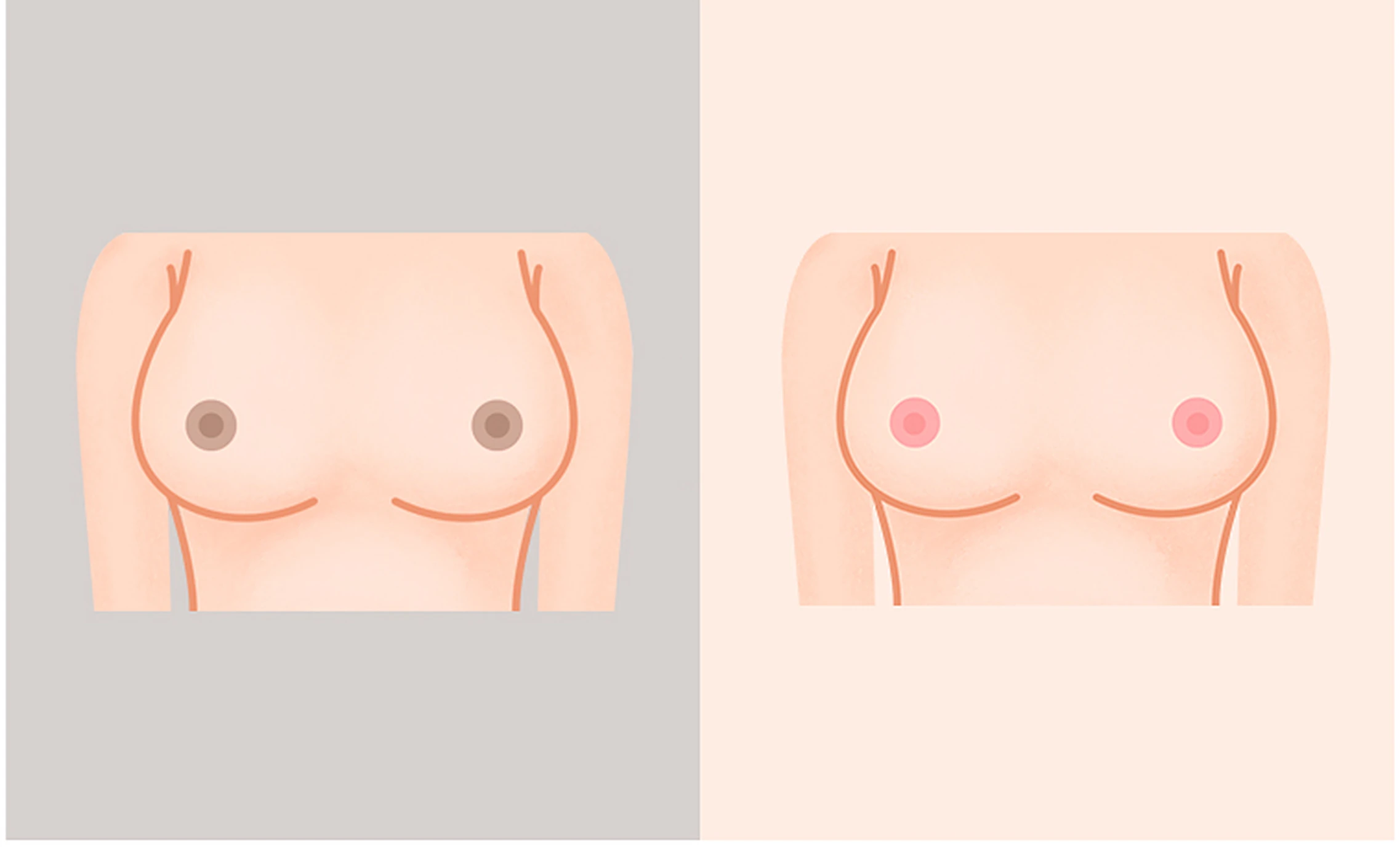
Illustration of areola tone getting lighter and more even
Darker areola toneLighter, even tone

How much nipple color can actually change

A laser reduces the amount of melanin in the skin; it does not replace your natural shade with another one. The realistic aim is to soften the contrast between the areola and the breast skin around it, or to even out patches that are darker than the rest. How far the color moves depends on where the pigment sits. Pigment in the upper skin layer is shed more readily as treated skin renews, while deeper pigment changes slowly, if at all.

It also helps to know what is not possible. Nobody can pick a target shade in advance, and the color will never be uniform like paint. The nipple tip, the areola and the small bumps on it (Montgomery glands) can each respond a little differently. If you expect a dramatic change after one visit, the result is likely to disappoint; a gradual softening over several weeks is a fairer expectation.

For the treatment plan itself, including the one-session and three-session options and the fees, see the main nipple and areola lightening page.


Why a lighter nipple shade does not stay fixed

Lightening lowers the pigment that is present now, but it leaves the pigment cells in place. Those cells respond to hormones, friction and sunlight for the rest of your life, so color can slowly return. The clinic's guidance is that the effect holds for about a year, and that figure varies from one woman to the next.

Some triggers are predictable:

  • A later pregnancy, which deepens areola color again
  • Breastfeeding, through hormones and the friction of feeding
  • Hormonal medicines that you start after treatment
  • Rubbing from sports bras or seams, and sun exposure on the chest

For this reason, if you plan to have a baby soon, it can make sense to wait until after pregnancy and nursing before treating the nipples at all.

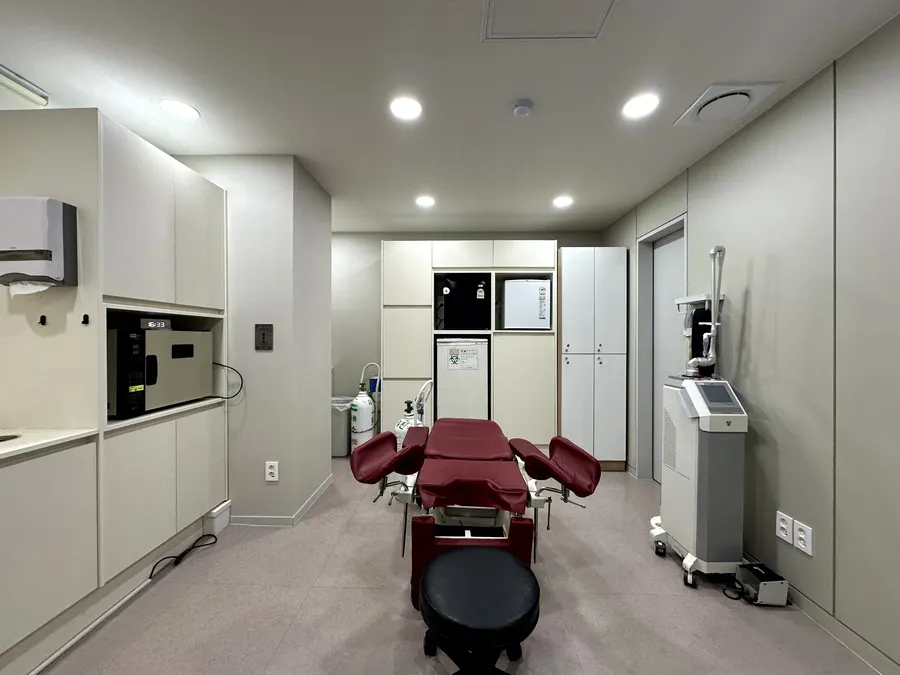
Treatment room with a gynecological chair at S Women's Clinic, Gangnam
The treatment room at S Women's Clinic

What shapes your nipple lightening result

Women with the same plan can end up with quite different results. The main factors are:

  • Skin type. Darker skin is more prone to post-inflammatory hyperpigmentation, new dark marks triggered by heat or irritation, which calls for extra caution.
  • The cause of the darkening. Color that arrived with a recent pregnancy behaves differently from pigment that has been there since puberty.
  • Spacing. Sessions about one month apart let the skin settle fully. Treating sooner raises the chance of irritation and of pale, mottled spots.
  • Aftercare. Keeping the area out of the sun and away from friction protects the result.

Evidence for the areola itself is scarce. Studies on laser treatment of pigment mostly concern the face and the underarms, such as a small 2019 study of low-energy Nd:YAG treatment for underarm darkening in Filipino women, and work on repeated low-fluence treatment has also documented mottled loss of pigment (Jang et al., 2015).

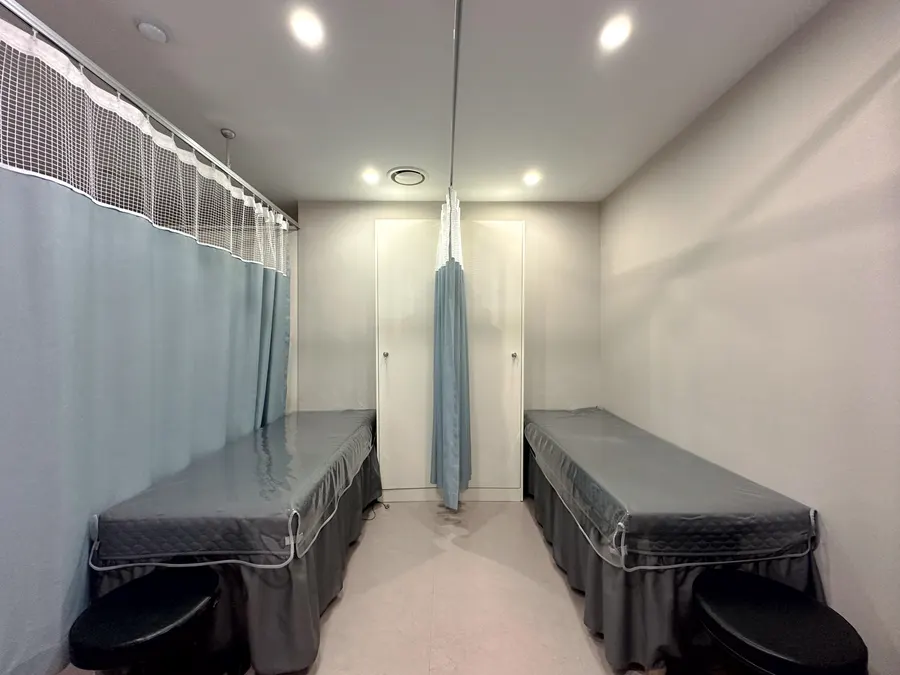
Two treatment beds separated by curtains at S Women's Clinic
Private treatment beds behind curtains

Lightening creams at home compared with a laser

Creams sold for darker nipples act on the surface. Some contain ingredients that slow melanin production, and they need months of regular use. The nipple and areola are sensitive, and strong products can cause redness, peeling and even new dark marks. Some lightening products sold online have been found to contain mercury or potent steroids, which should never go on this skin. If you are breastfeeding, anything applied to the nipple can reach the baby.

A laser works through a different mechanism, removing pigment through controlled renewal of the skin, and it is used only after a doctor has looked at the area. That examination matters: a change in nipple color that comes with crusting, discharge or a lump has to be investigated, and neither a cream nor a laser is the answer to it.

Your doctor

The doctor who consults you is the one who operates.

Dr. Hye-Yeon Lee
Dr. Hye-Yeon LeeKorean board-certified OB/GYN · Representative director

Dr. Lee has treated women in Gangnam since 2008. She plans each surgery around natural shape and symmetry, explains every option — including when a procedure is not needed — and recommends only what fits your goal.

  1. 2000

    Medical license No. 70918 — Ministry of Health and Welfare, Korea · Chonnam National University Medical School

  2. 2001–2006

    Internship and OB/GYN residency, Samsung Medical Center · Master's degree, Chonnam National University (2004)

  3. 2006

    OB/GYN specialist certificate No. 5679 — Ministry of Health and Welfare

  4. 2006–2008

    Bomvit Hospital · Associate director, Floche Women's Clinic

  5. 2008

    Opens S Women's Clinic, a cosmetic gynecology practice in Gangnam

  6. 2012

    Attended the 2nd Asia-Pacific Congress on Gynecoplastic Surgery, Seoul

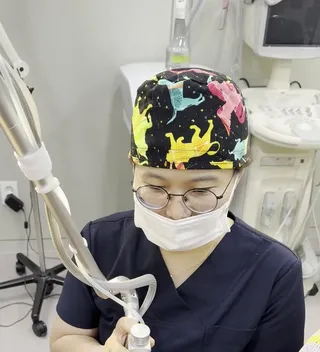
Dr. Hye-Yeon Lee during a laser treatment
Dr. Lee during a laser treatment.
Before & After

Real results, shared privately.

5,000 cumulative cases at S Women's Clinic, 2016 – 2026, as recorded by the clinic. Before-and-after photos are never posted on this site — ask us, and we'll send you a private link to cases like yours.

  1. 01

    Tell us your concern

    Which procedure, and what worries you most.

  2. 02

    Get a private link

    Cases close to yours — our team shares the link during your consultation.

  3. 03

    Talk it through with Dr. Lee

    At consultation, she explains what is realistic for your body.

Promotion

Current promotions

Tap a card to see it full size.

Questions about lightening nipple color

Can nipple and areola color be lightened with a laser?

Yes, partly. A fractional laser reduces some of the melanin in the nipple and areola as the treated skin renews. The change is gradual and varies between women, and no particular shade can be promised in advance.

Is nipple lightening permanent?

No. The pigment cells stay in the skin, so color can return with hormones, a later pregnancy, friction or sun. The clinic's guidance is that the lighter shade lasts about a year, and this varies from woman to woman.

Can I choose how light my nipples will become?

Not exactly. The laser lowers the amount of pigment present, and how much it shifts depends on your skin and the depth of the pigment. The goal discussed at the consultation is softer contrast with the surrounding skin.

Do nipple lightening creams work?

Some can lighten the surface slowly with regular use, but they can irritate this sensitive skin. Avoid unlabeled products bought online, and check with a doctor before applying anything to the nipples while breastfeeding.

Will my nipples get darker again if I have another baby?

Very likely. Pregnancy hormones deepen areola color, and this can undo earlier lightening. If you plan another pregnancy soon, it may be more sensible to wait until after pregnancy and breastfeeding.

Google reviews

What visitors wrote on Google.

These reviews were posted publicly on our Google Business Profile and appear as written — not selected or edited by the clinic.

4.8 19 Google reviews
★★★★

I saw the director on YouTube and trusted them because they made a good impression, but booking an appointment was a bit tricky because they are very popular. Still, I feel like I made the right choice, so I am recommending them to my…

Bbread2 months ago · Translated by Google

★★★★

Thanks to the photographic materials provided during the consultation, I was able to accurately understand my condition. It was a bit uncomfortable at the beginning of my recovery, but I was satisfied with the results.

예은이A month ago · Translated by Google
★★★★

I got a recommendation from an acquaintance, and the cost was a bit of a burden. However, I can definitely feel the difference in effectiveness.

원은별A month ago · Translated by Google
★★★★★

I specifically chose the director for my surgery after watching his YouTube video! He has such a great personality, which made me want to have the surgery with him even more haha.

leeA month ago · Translated by Google

Read all 19 reviews on Google Maps

Consultation

Tell us your concern.

Send your question — no photos needed. We reply in English as soon as possible.

We reply as soon as possible.

Visit Gangnam

Exit 12, a five-minute walk.

Address5F (Room 501), Won Bldg, 121 Teheran-ro, Gangnam-gu, Seoul
Find us255 m from Gangnam Station Exit 12 · Office Depot on the 1st floor
HoursMon · Tue · Wed · Fri 10:00–19:00 · Thu 10:00–18:00 · Sat 10:00–15:00
Weekday lunch 13:30–14:30 · Closed Sun & public holidays
ParkingMechanical parking behind the building, 1 hour free · valet available (valet fee paid by the visitor)
RegisteredForeign patient care registration M-2024-01-08-0101
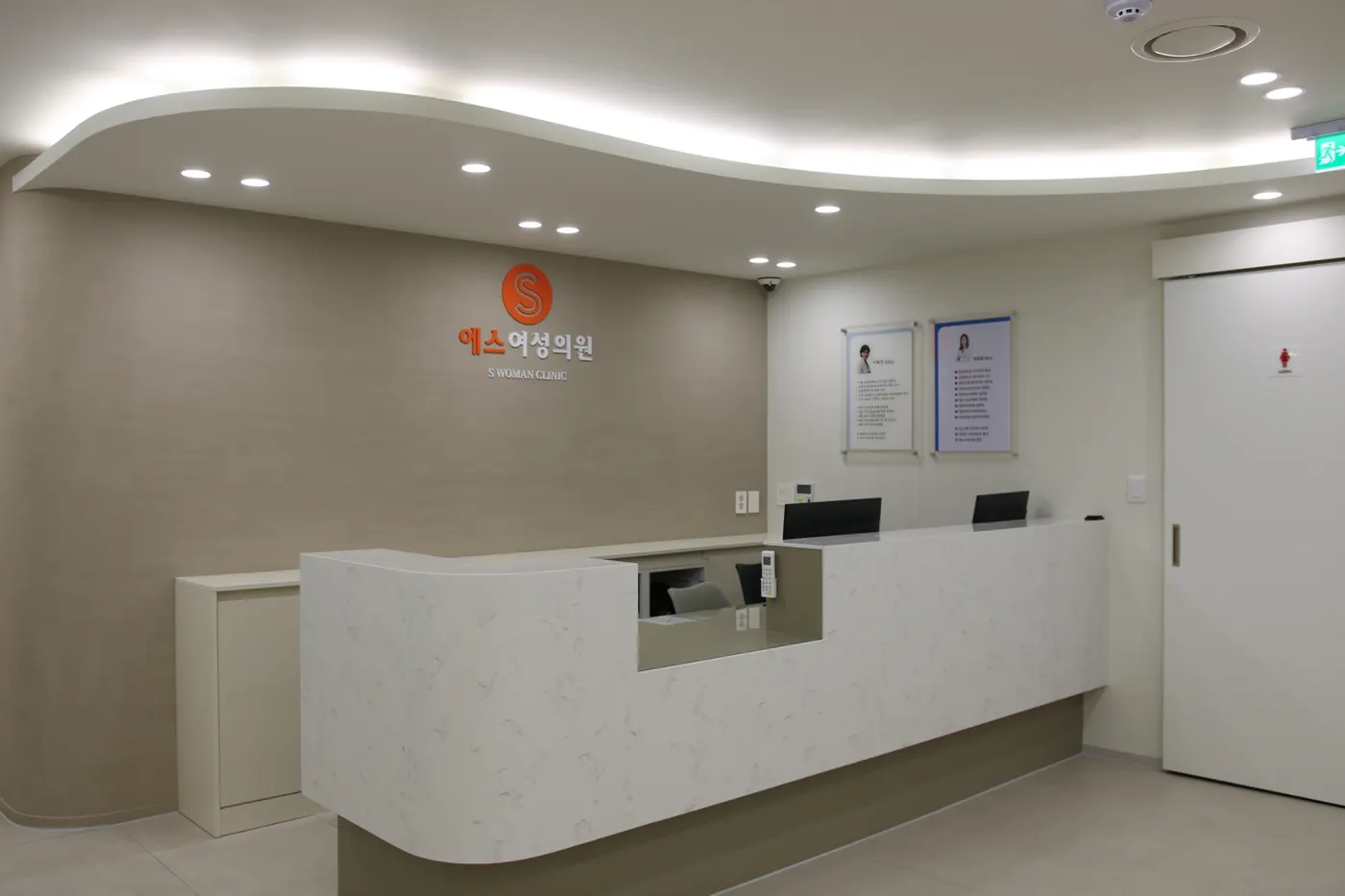
Reception with the S Women's Clinic sign

5th floor — look for the orange S sign at reception.

References

  1. Q-Switched 1064 nm Nd:YAG Laser in Treating Axillary Hyperpigmentation in Filipino Women With Skin Types IV-V. Journal of Drugs in Dermatology. 2019. doi:10.36849/jdd.2020.4623
  2. Changes in Melanin and Melanocytes in Mottled Hypopigmentation after Low-Fluence 1,064-nm Q-Switched Nd:YAG Laser Treatment for Melasma. Annals of Dermatology. 2015. doi:10.5021/ad.2015.27.3.340