I saw the director on YouTube and trusted them because they made a good impression, but booking an appointment was a bit tricky because they are very popular. Still, I feel like I made the right choice, so I am recommending them to my…
Does “Vaginal Rejuvenation” Work? Reading the Trials

Not reliably, on current evidence. Treatments sold as “vaginal rejuvenation”, such as CO2 laser, HIFU and radiofrequency, rest on small or conflicting studies, and the largest sham-controlled laser trial found no meaningful benefit for menopausal symptoms. Nobody can say how long a change would last. Dr. Hye-Yeon Lee, a female OB/GYN specialist, goes through this with you before any decision.
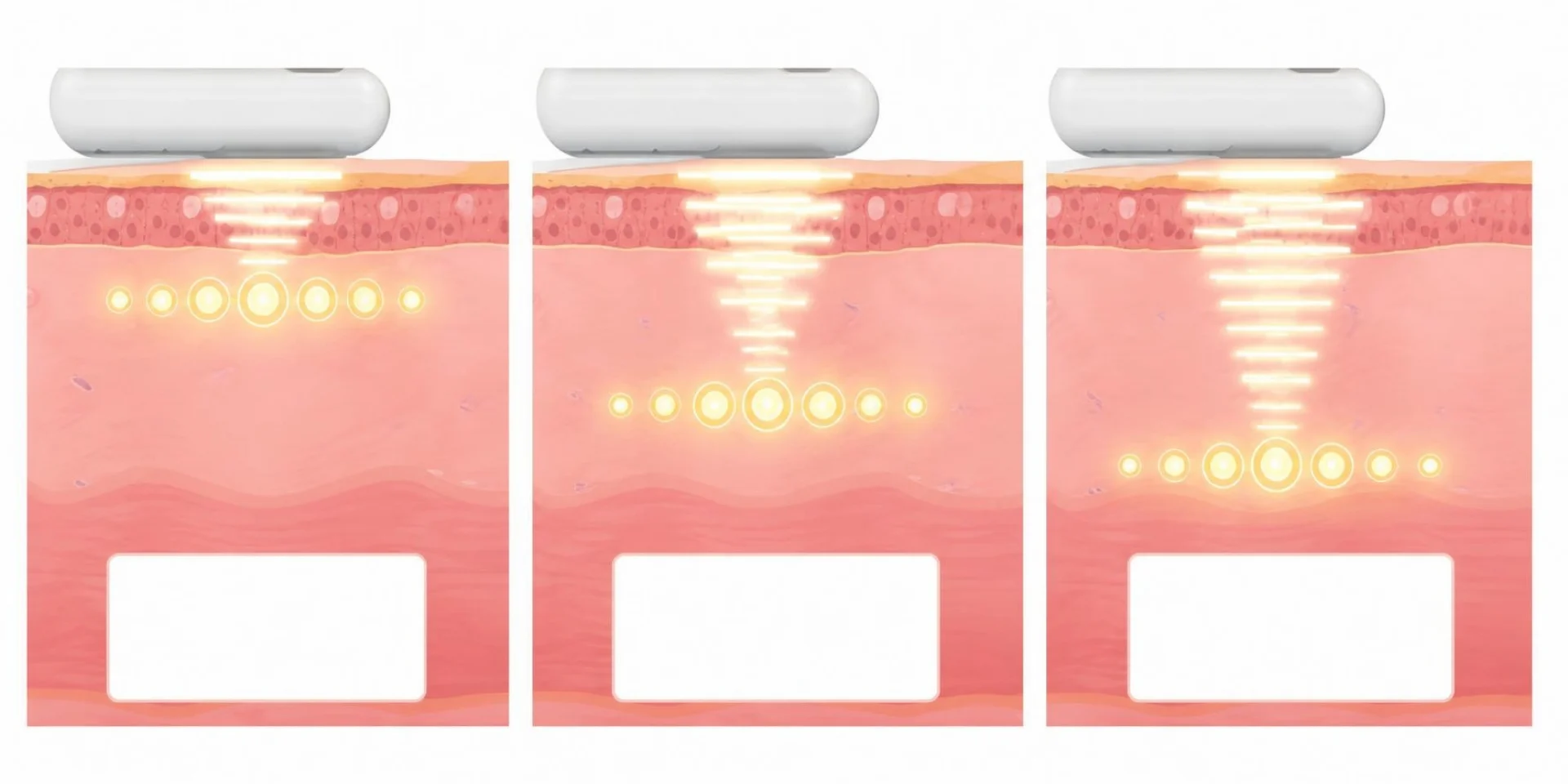
S1.57.0 MHz1.5 mmM3.07.0 MHz3.0 mmD4.54.0 MHz4.5 mmWhat the term “vaginal rejuvenation” covers, and why specialists object
“Vaginal rejuvenation” is a marketing phrase, not a medical diagnosis or a single procedure. It has been used for surgery, for lasers, for focused ultrasound, for radiofrequency and for injections, often with promises about tightness, moisture, bladder control or intimacy attached.
Specialist bodies have pushed back. IUGA, an international society of pelvic floor specialists, concluded in 2018 that laser-based vaginal devices should not be recommended until robust trials show they are safe and effective (IUGA, 2018), and reports of burns, scarring, painful intercourse and ongoing pain after energy treatments have added to the concern. The American College of Obstetricians and Gynecologists has also criticized advertising that presents established procedures under new names, and states that the safety and effectiveness of cosmetic genital procedures have not been established.
That is why S Women's Clinic does not describe its own treatments with the phrase. It names the device, the energy it uses and the layer of tissue it reaches, so you can judge the treatment on its own terms.

What trials show for CO2 laser, HIFU and radiofrequency
The three device types have very different amounts of research behind them, and the evidence for one should not be borrowed for another.
- Fractional CO2 laser. In the most rigorous trial so far, postmenopausal women with vaginal symptoms received either the laser or a sham procedure that looked and felt the same. A year later, symptom severity was not meaningfully different between the groups (Li et al., 2021).
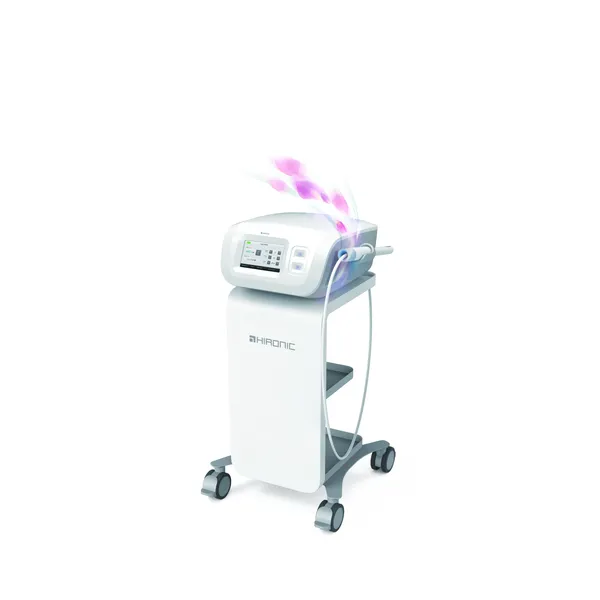
- HIFU. The study of the Ultra Vera HIFU device followed 20 women through two sessions. Laxity questionnaire answers and a vaginal health index improved, but without a comparison group it cannot show what caused the change (Kolczewski et al., 2022).
- Radiofrequency. A sham-controlled trial of a surface-cooled radiofrequency device from another manufacturer found that women rated their laxity better after one treatment, with follow-up to 12 months (Krychman et al., 2017). That device is not the one used at this clinic, and the result cannot be transferred to a different machine.
Professional bodies looking at the whole picture remain cautious. The UK's Royal College of Obstetricians and Gynaecologists concluded in 2022 that most laser studies are small, short and observational, and that the treatment should not spread outside research settings until stronger trials exist (Phillips et al., 2022).

Ultra Vera HIFU
How long vaginal rejuvenation lasts, and why no reliable number exists
Questions about duration usually come down to “a year or two?”. The research cannot answer it. Most studies follow women for weeks or a few months, the controlled ones are few, and none has tracked a group long enough to show when a change fades or whether repeat sessions keep it going.
Collagen is renewed continuously, and the tissue keeps responding to age, hormones and births after any treatment. Even where a woman notices a difference, it is reasonable to expect it to be modest and to change with time. Any figure in months or years offered with confidence goes beyond the published evidence, and you are entitled to ask where it comes from.

Questions to ask before paying for a device treatment
Whoever offers you an energy treatment for the vagina, these questions help separate a careful plan from a sales pitch:
- What is the exact name and manufacturer of the device, and how does it work?
- Which published study supports using it for my concern, and did that study have a comparison group?
- What happens if I notice no change after the first session?
- Who examines me, and who operates the device?
- Is the price quoted with tax, and does it cover one session or several?
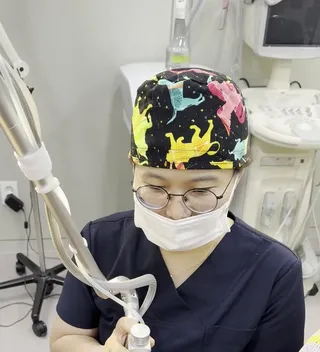
At this clinic the answers are on the device pages: how each device works, the studies with their limits, and fees excluding VAT. Dr. Hye-Yeon Lee examines you and treats you herself, and if she thinks a device is unlikely to help, she says so and suggests what else to consider, including doing nothing.

The evidence on non-surgical treatments in brief
| CO2 laser trial (2021) | No meaningful difference from sham after 12 months |
|---|---|
| HIFU device study (2022) | 20 women, no comparison group |
| Radiofrequency (2017) | Another maker's device; sham-controlled |
| IUGA position (2018) | Laser devices not recommended pending robust trials |
| How long effects last | Not established by research |
The doctor who consults you is the one who operates.

Dr. Lee has treated women in Gangnam since 2008. She plans each surgery around natural shape and symmetry, explains every option — including when a procedure is not needed — and recommends only what fits your goal.
- 2000
Medical license No. 70918 — Ministry of Health and Welfare, Korea · Chonnam National University Medical School
- 2001–2006
Internship and OB/GYN residency, Samsung Medical Center · Master's degree, Chonnam National University (2004)
- 2006
OB/GYN specialist certificate No. 5679 — Ministry of Health and Welfare
- 2006–2008
Bomvit Hospital · Associate director, Floche Women's Clinic
- 2008
Opens S Women's Clinic, a cosmetic gynecology practice in Gangnam
- 2012
Attended the 2nd Asia-Pacific Congress on Gynecoplastic Surgery, Seoul

Current promotions
Tap a card to see it full size.
Questions about whether vaginal rejuvenation works
Does non-surgical vaginal rejuvenation actually work?
The evidence does not show a reliable benefit. Controlled trials are few, the largest laser trial found no meaningful difference from a sham procedure, and studies of HIFU and radiofrequency are small or used other devices. Some women report a change, but no one can predict who will.
How long do results of vaginal laser or HIFU last?
No one knows. Published studies follow women for months at most, too short to show when an effect fades or whether repeat sessions help. Treat any promise of a fixed number of months or years with caution and ask what evidence supports it.
What is vaginal rejuvenation?
It is a marketing label rather than a medical term. It has been applied to surgery, lasers, HIFU, radiofrequency and injections aimed at laxity, dryness or appearance. Because the label says nothing about how a treatment works, it is more useful to ask about the specific device and its evidence.
Why do some studies report improvement if the evidence is weak?
Many studies simply measure women at the outset and again some weeks later, with no comparison group. Expectations, the attention of the study itself and natural changes over time can all shift the answers. When a sham group is added, as in the largest laser trial, the difference can disappear.
Is vaginoplasty more reliable than a device treatment?
They do different things. Vaginoplasty for women (vaginal tightening surgery) physically narrows the opening and repairs the perineal muscles, which a device cannot do, but it carries surgical risks and a recovery period. Which, if either, makes sense depends on what the examination shows.
Can a device treatment cause harm even if it does not help?
Yes. Burns, scarring, painful intercourse and lasting pain have been reported with vaginal energy devices, and specialist societies cite these harms in their caution. Careful examination and settings reduce that risk, but they cannot remove it, so the decision should weigh both sides.
Will Dr. Lee tell me if she thinks treatment won't help?
Yes. Dr. Hye-Yeon Lee examines you before anything is booked as a treatment, and if she thinks a device is unlikely to make a difference for you, she says so. She may suggest pelvic floor exercises, surgery or simply leaving things as they are.
What visitors wrote on Google.
These reviews were posted publicly on our Google Business Profile and appear as written — not selected or edited by the clinic.
Thanks to the photographic materials provided during the consultation, I was able to accurately understand my condition. It was a bit uncomfortable at the beginning of my recovery, but I was satisfied with the results.
I got a recommendation from an acquaintance, and the cost was a bit of a burden. However, I can definitely feel the difference in effectiveness.
I specifically chose the director for my surgery after watching his YouTube video! He has such a great personality, which made me want to have the surgery with him even more haha.
Tell us your concern.
Send your question — no photos needed. We reply in English as soon as possible.
Exit 12, a five-minute walk.
Weekday lunch 13:30–14:30 · Closed Sun & public holidays

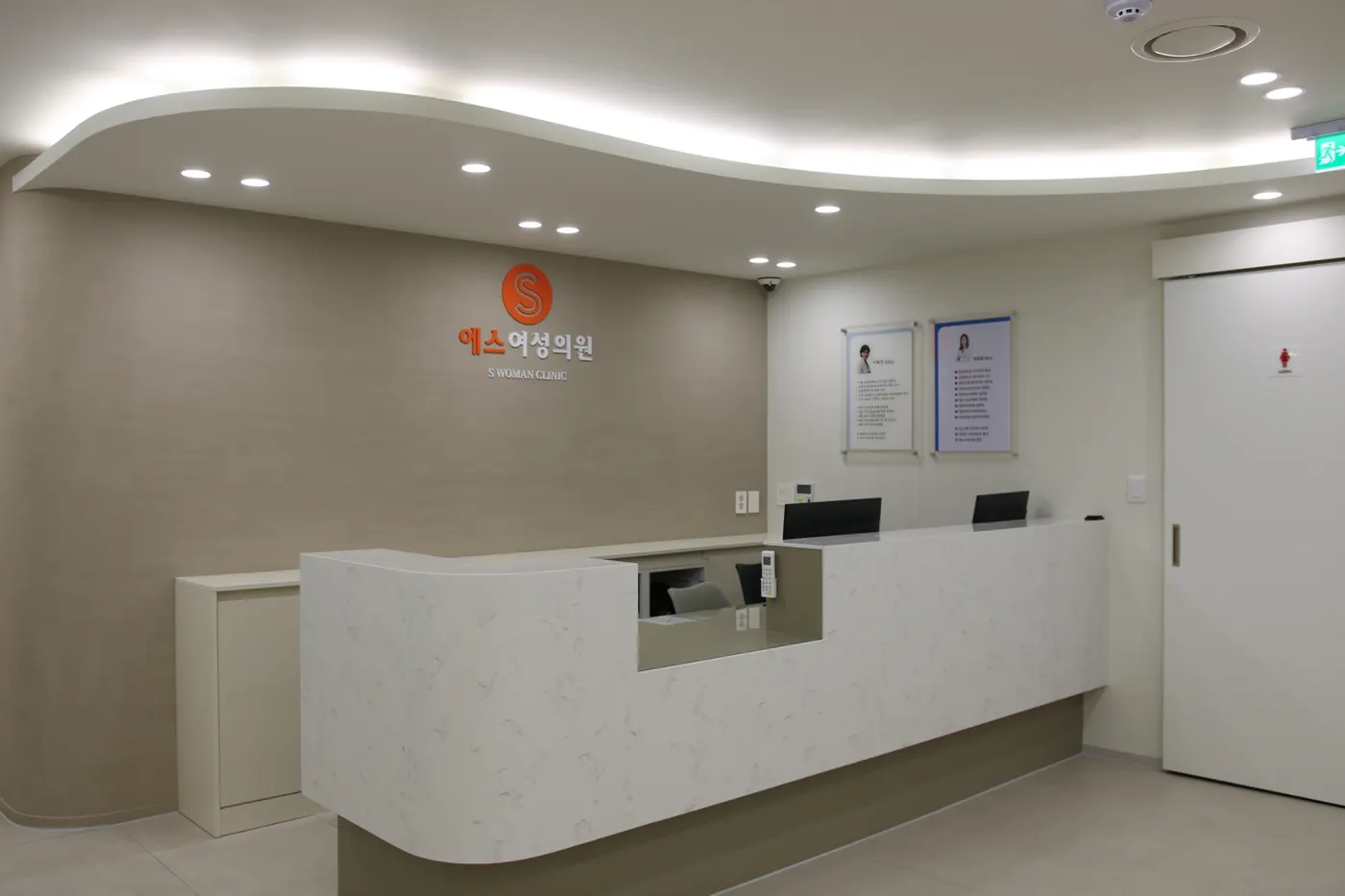
5th floor — look for the orange S sign at reception.
References
- Effect of Fractional Carbon Dioxide Laser vs Sham Treatment on Symptom Severity in Women With Postmenopausal Vaginal Symptoms. JAMA. 2021. doi:10.1001/jama.2021.14892
- Micro-Focused Ultrasound Therapy in Patients with Urogenital Atrophy and Vaginal Laxity. Journal of Clinical Medicine. 2022. doi:10.3390/jcm11236980
- Effect of Single-Treatment, Surface-Cooled Radiofrequency Therapy on Vaginal Laxity and Female Sexual Function: The VIVEVE I Randomized Controlled Trial. The Journal of Sexual Medicine. 2017. doi:10.1016/j.jsxm.2016.11.322
- Laser treatment for genitourinary syndrome of menopause. BJOG: An International Journal of Obstetrics & Gynaecology. 2022. doi:10.1111/1471-0528.17195
- IUGA committee opinion: laser-based vaginal devices for treatment of stress urinary incontinence, genitourinary syndrome of menopause, and vaginal laxity. International Urogynecology Journal. 2018. doi:10.1007/s00192-018-3830-0